Header 1

Our future, our universe, and other weighty topics


Showing posts with label Mars lights. Show all posts

Saturday, January 2, 2016

Lame Catchphrases and Excuses of the Anomaly Deniers

As part of their efforts to keep us believing that we live in a bland universe (what we might call a three-flavor universe), and not a funky universe rich in paranormal phenomena (what we may call a 64-flavor universe), various people engage in what we might call anomaly denial. Such figures tend to repeat the same lame excuses and catchphrases again and again, to try to dismiss strange observations that don't fit in with their tidy sanitized worldviews. Let's look at some of these catchphrases, and see why they are mainly just vacuous rhetorical devices.

“Things like that don't happen.”

This is such a sweeping dogmatic statement that it can be immediately dismissed as an overreaching absurdity. Not only does the statement claim that some particular type of anomalous phenomena doesn't occur, it basically asserts that no paranormal phenomena ever occurs. One way to rebut the claim is to remind someone that the universe began in the most anomalous, unusual way imaginable (according to scientists, the universe suddenly burst into being from an infinitely dense point). Then say: “Things this odd apparently have been happening from the very beginning of time.” Another good rejoinder to the claim “things like that don't happen” is merely to ask: how do you know?

“There must be a rational explanation.”

This is basically a rhetorical device that attempts to characterize any paranormal explanation as irrational, and then asks us to look for mundane explanations that are deemed rational. A good way to counter this bit of rhetoric would be to say something like, “Yes, everything in the universe has a rational explanation, even the most mysterious things that are utterly beyond human explanation.”

“If this existed, scientists would understand it or acknowledge it.”

One reason that this claim is not very persuasive is that the universe is full of mysteries that scientists don't understand, such as the Big Bang, dark energy, dark matter, and quantum entanglement. Another reason that this claim is not very persuasive is that investigating the paranormal seems to be almost a cultural taboo for the great majority of scientists. Since most scientists have pretty much declared a “hands off” policy in regard to the paranormal, there is no reason why we should expect them to understand anything relating to the paranormal, even if it existed. Similarly, if I refuse to look into the topic of quantum chromodynamics, you should not expect me to understand it.

“You don't believe in that kind of nonsense, do you?”

This is a kind of loaded question similar to a question such as, “Have you stopped beating your wife?” The person who asks the question hopes that the person will answer, “No,” and thereby exclude the paranormal possibility. But if the person answers, “Yes,” he is then put in the position of asserting his own belief in nonsense.

A good reply this type of question is to say something like: it's illogical to deny the possibility of something when evidence for such a thing appears.

“I can't believe that – it's impossible.”

In general, science does not warrant claims that particular anomalous phenomena are impossible. Almost the only claims that are impossible would be those that assert the nonexistence of something science has proven. So claims such as “carbon doesn't exist” or “gravity doesn't exist” are impossible, according to science. But science in no way excludes most of the anomalous phenomena people claim to have observed.

“I have to reject that report – it's unscientific.”

Some may think that it is real scientific to immediately reject some report or claimed observation that does not match the expectations of scientists. But that usually isn't scientific, but instead the opposite of scientific. A good scientific procedure is to accept any observation or possible observation relating to a hypothesis, and to store that observation in a set of observations that will be considered whenever that hypothesis is to be considered. You could describe such a policy with this slogan: bank it, don't bunk it. In other words, rather than immediately dismissing an anomalous observation with some lame excuse such as “things like that don't happen,” you should “bank” an observation by putting it somewhere where it might be “withdrawn” for further scrutiny when the topic is under further analysis.

“There's no evidence for that.”

This is perhaps the favorite catchphrase of skeptics, and is ruthlessly deployed even in many cases where there is a huge amount of evidence for something. The best way to counter this (when appropriate) is to assert the opposite, something like: “To the contrary, there is a great deal of evidence for this.”

“You must have just hallucinated.”
Variations: “He must have just hallucinated” or “She must have just hallucinated.”

This catchphrase is useful for trying to wipe out evidence for various anomalous phenomena such as apparitions, near-death experiences or UFO's. You can rebut it by pointing out that hallucinations can reasonably be attributed only to people with chronic mental illnesses or people under the influence of alcohol or drugs, and cannot be reasonably attributed to people who are in a deep state of unconsciousness. I am using here the proper definition of hallucination: an apparent perception (such as seeing something or hearing something) that comes without any external stimulus that produces it.

“Your eyes must have been playing tricks on you.”

This is an appeal to what is basically a bogus possibility, the possibility that your eyes suddenly malfunctioned, and caused you to think you were seeing something that you weren't seeing. Since the human eye is a remarkably reliable instrument, this isn't a believable rejoinder. Unless you have chronic vision problems, your eyes will never “play tricks on you,” although your mind may misinterpret some information that your eyes send you.

“Your camera must have malfunctioned.”

This is like the “your eyes must have been playing tricks on you” statement, but involves a camera rather than an eye. It's just as weak a statement, because modern digital cameras are very reliable things that virtually never have one-shot malfunctions that might be interpreted as evidence for the paranormal.

“It was probably just an optical illusion.”

If you think an optical illusion is a plausible explanation for an anomalous observation, ask yourself: when was the last time you can remember seeing an optical illusion? It's probably some optical illusion you saw in a book. That's because optical illusions are pretty rare in nature.

“People like me don't believe in that kind of stuff.”
Variation: “People like us don't believe in that kind of stuff.”

This is basically an appeal to a sociological or cultural taboo. The person using the catchphrase is basically reminding you that within some particular subculture, there are penalties or sanctions for believing in something like the anomaly being considered. A rejoinder is to point out that acceptance of an anomaly should be based on evidence, not on taboos.

“That is too weird to be real.”
Variation: “That is too crazy to be true.”

One can counter this catchphrase with this observation: nature loves weirdness. And, of course, it does. Almost all of the things that might be dismissed as “too weird to be true” are not half as weird as some of the things scientists believe in, such as the weird rules of quantum mechanics, quantum entanglement, black holes, neutron stars, and the sudden origin of the universe in a singularity.

“They're all just a bunch of fakers.”

Using any statement beginning with “they're all just...” is in general a sign of prejudice and stereotyping. It's generally impossible to prove such statements, and it's also generally impossible to prove weaker statements beginning with “they're mainly just a bunch of ...”
A good way to rebut such bigotry is just to ask: what evidence do you have to support that statement?

“It was probably just a lens smudge.”

When used to dismiss some anomaly photograph, a comment such as this is basically equivalent to accusing the photographer of being a complete moron. Lens smudges keep producing the same effect until the camera is cleaned. Only the most careless and dimwitted photographer would fail to notice that such an anomaly was occurring in each photo. Also, lens smudges cannot be used to explain anything other than a blurry blob, because the camera cannot focus on anything on the lens.

“It was probably just dust.”

Dust isn't big enough to produce photographic anomalies when a photographer shoots in ordinary air. The particle sizes of outdoor dust particles are only about 1 micron, which is about one fifteen thousandth (1/15000) of the area right in front of the lens. That's hundreds of times too small to produce a decent photographic anomaly. If the dust in ordinary air were sufficient to produce photo anomalies, almost every flash photo would show such anomalies.

“It was just a cosmic ray hitting the camera.”

This excuse is used to explain away anomalies in photos taken in space or on Mars. It isn't a very persuasive excuse when the anomaly occurs on the exact horizon or when the anomaly seems to have more structure than we would expect a passing cosmic ray to produce. 

Below is an example of a anomaly explained as a "cosmic ray hit." We see what looks like a luminous figure.  The original NASA photo can be seen here. The figure appears exactly in front of the landing site where one of the Mars rovers was deployed from. What are the odds against a cosmic ray hitting in that exact spot, to create what looks like a figure with legs?

Mars figure

Friday, November 14, 2014

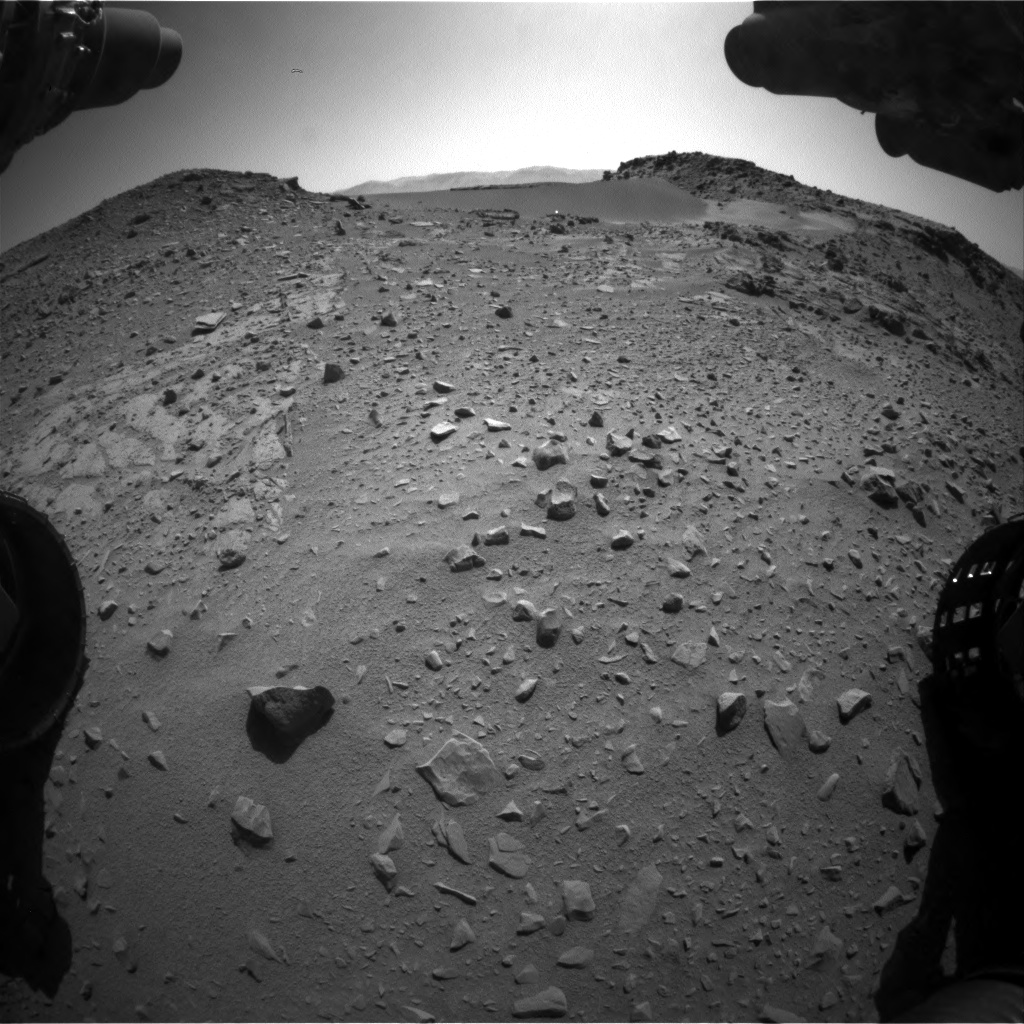
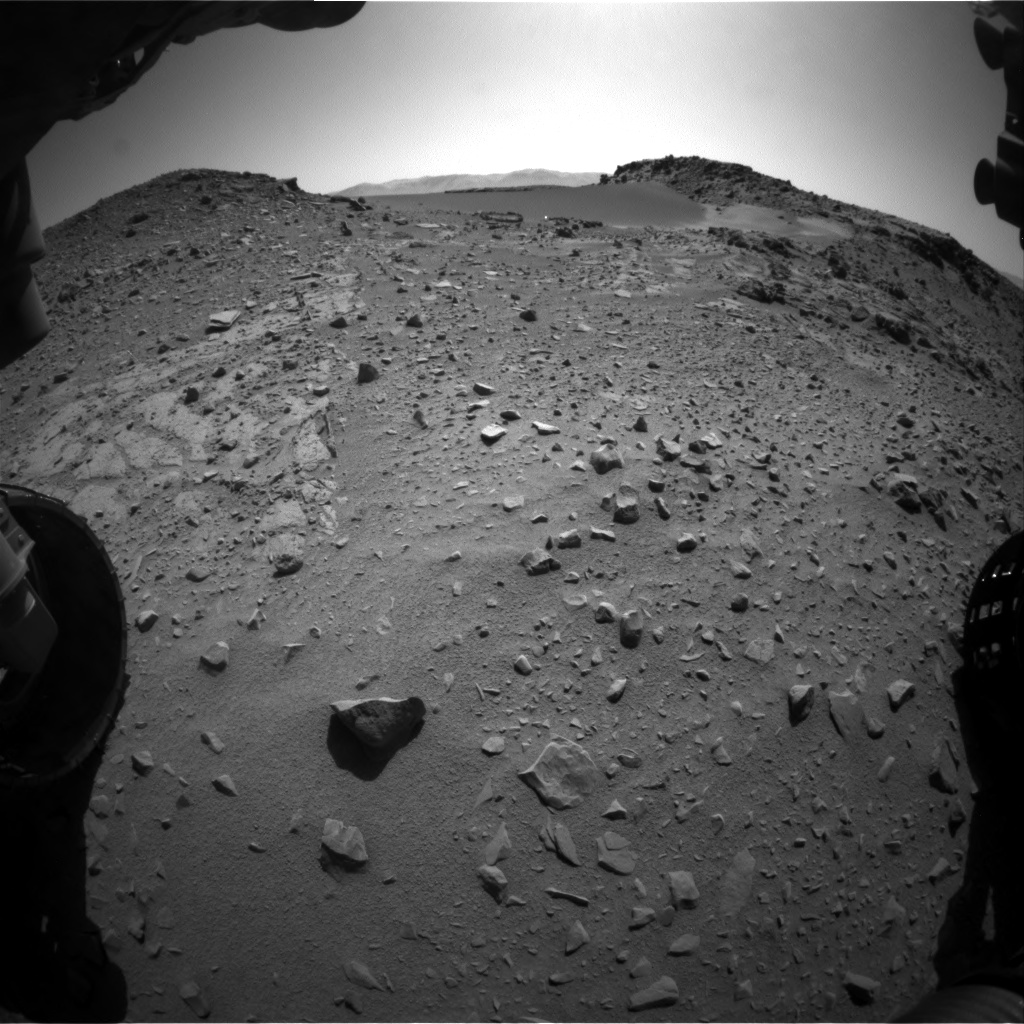
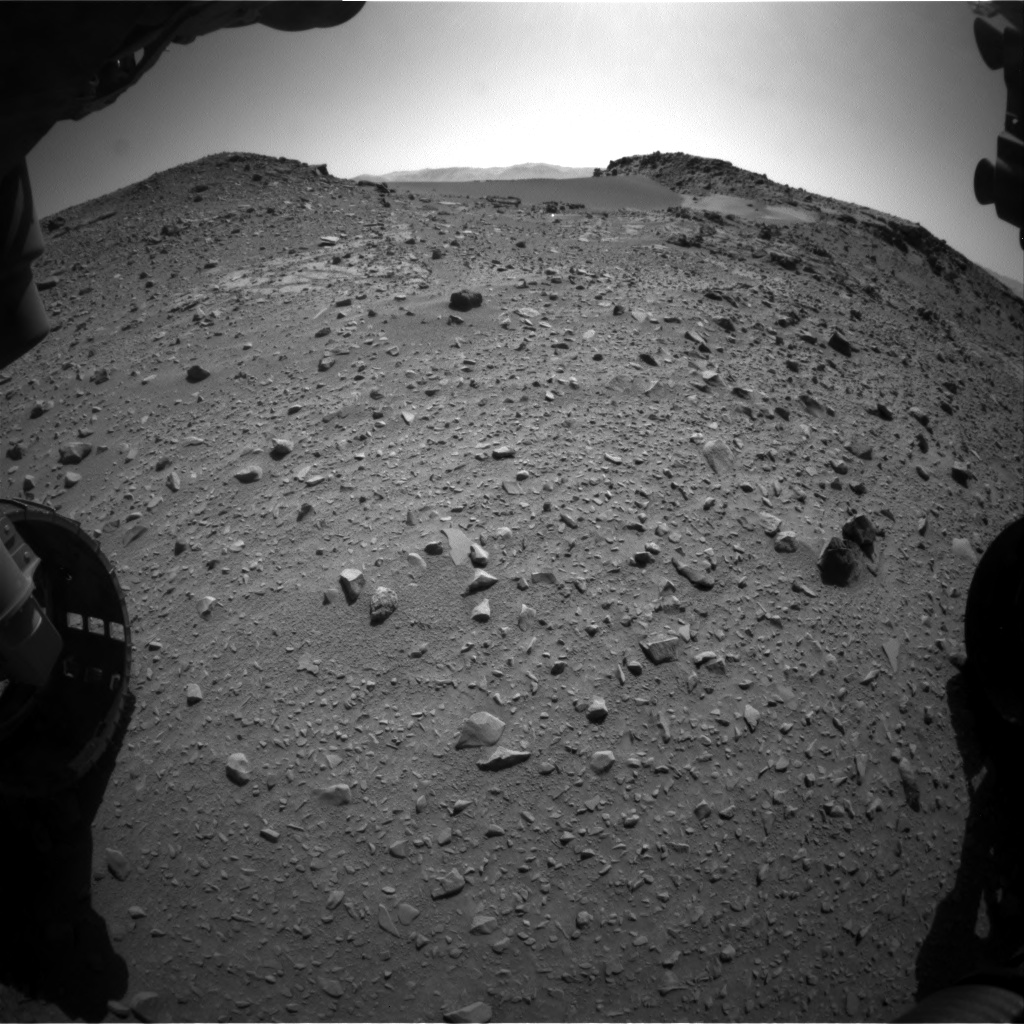
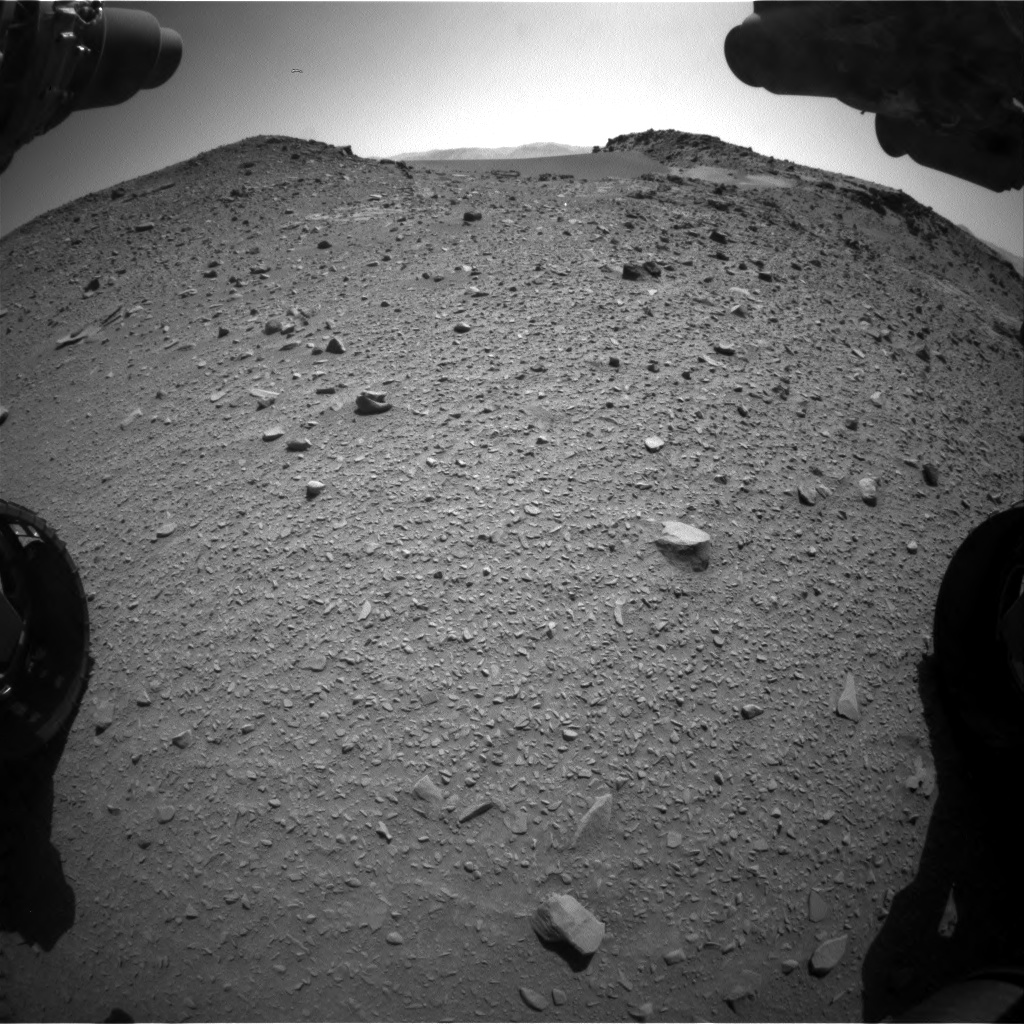
Moving Orb Seen on Mars in These 6 NASA Photos

The YouTube source Paranormal Crucible has discovered an astonishing anomaly on Mars that was shown on a video made by that source. Rather than linking to that video (and leaving you with that same old “did someone fake a video on youtube.com ” question), in this post I will look directly at the source NASA photos that were used to make that video. Looking at the original NASA source photos, it does indeed seem that some anomalous moving orb has been detected on Mars.

The video put up by Paranormal Crucible failed to give the vital information about which Martian day the anomaly was detected. But they did have a link to one of the original NASA photos, and in the URL of that link I was able to find the Martian day number. The day number is Sol 527, which corresponds to January 29, 2014.

The set of photos showing the moving orb was taken by one of the Front Hazard Avoidance Cameras (“front hazcams”) on the Curiosity rover. Images from that camera can be found at this url.

To find the images for a particular Martian day, you merely need to scroll down to a particular day number, using the listbox shown at the top left of the page. When we click on the row for Sol 527, we come to this NASA page showing images taken by the Front Hazard Avoidance Cameras on Sol 527. The photos I will reproduce from that page were taken over a span of about 15 minutes.

The third image in the list is here. Below is a crop of this image starting at horizontal pixel 474 and vertical pixel 133, with a width of 142 and a height of 102:


Mars moving orb
Notice the little white ball in the bottom right quarter of the photo.

The fourth image in the list is here. Below is a crop of this image starting at horizontal pixel 474 and vertical pixel 133, with a width of 142 and a height of 102 (the same numbers used for the previous crop):

Mars moving orb
Notice that the little white ball has moved a little to the left.

The fifth image of the list is here. Below is a crop of this image starting at horizontal pixel 474 and vertical pixel 133, with a width of 142 and a height of 102 (the same numbers used for the previous crop):

Mars moving orb


The sixth image of the list is here. Below is a crop of this image starting at horizontal pixel 474 and vertical pixel 133, with a width of 142 and a height of 102 (the same numbers used for the previous crop):

Mars moving orb


The camera moved a little bit, so it's not exactly the same area as before, but it's close enough that you can detect that the little white ball has moved from the previous photo.

The seventh image of the list is here. Below is a crop of this image starting at horizontal pixel 474 and vertical pixel 133, with a width of 142 and a height of 102 (the same numbers used for the previous crop):

Mars moving orb


The orb is now in the bottom right quarter of the image above. The eighth image of the list is here. Below is a crop of this image starting at horizontal pixel 474 and vertical pixel 133, with a width of 142 and a height of 103 (the same numbers used for the previous crop, except 1 pixel greater on the height):

Mars moving orb


Again we see the orb in the bottom right part of the image above. By the time we get to image 11 in the series of photos taken at this location, there is no more sign of the orb.

The following color-coded visual illustrates how the position of the orb changed between the third photo in the series and the eighth photo of the series. The third and fourth photos were taken at the same time (with a Left camera and a Right camera being a little bit apart from each other). The fifth and sixth photos were also taken at the same time, as were the seventh and eighth photos.

The images on this NASA page for Sol 527 are listed in reverse chronological order. The orb apparently moved from the area shown by the blue circle and the red circle, then moved to the area shown by the green circle and purple circle, then moved to the area shown by the pink circle and the orange circle.


How can we explain this series of photographs? A few months ago when people pointed out a pair of photos that seemed to show a mysterious light on the Mars horizon on two consecutive days, NASA tried to explain the anomaly by saying it was a cosmic ray, or light reflecting from a rock. Does either explanation work here?

The cosmic ray explanation is perhaps a good explanation for a strange little blip shown on one particular photograph on one particular day. A cosmic ray is a little particle coming from deep in space, that arrives in a random location at a particular time, with the location and time being completely unpredictable. But we cannot account for a light seeming to move around at a particular location on the same day, in at least six consecutive photographs of Mars, by imagining that is caused by cosmic rays. Cosmic rays absolutely do not cluster or clump together at some particular location and time; they appear spread out at random places and times. In order for you to have all of these little orb photos being due to cosmic rays, you would have to have at least three cosmic ray hits during different moments of the same fifteen minutes in the same little spot of six consecutive photographs, with it all being a gigantic coincidence. That would require a coincidence comparable to you coincidentally guessing correctly the telephone numbers of three different people you met at the same time.

We also cannot account for the apparently moving orb by imagining that it was caused by a rock reflection. A rock with a reflecting surface might cause a little blip of light at one spot in the photograph, but that rock would not move around within a particular area of the photo. Could it be that rapid winds blew around a rock to different positions? No, winds that high would have created a dust storm that would have left many signs in this photo that are not observed; there were no such heavy winds when these photos were taken. 

Could the orb be the result of a camera glitch? No, because two different cameras (the Left and Right cameras) have both shown the orb and that it is moving. So, for example,  we cannot plausibly say that "dead pixels" are causing the orb's appearance. You might see a few empty pixels in the photos taken by one of the two cameras, but you would not coincidentally see a "dead pixel area" that matched in two different cameras, particularly given that most of the other images on this page for Sol 527 do not show any such orb or "dead pixel" area.  

I don't have any explanation for this mysterious Martian orb. I can merely point out that it looks very similar to what has been observed on our planet countless times. Since the introduction of the digital flash camera about twenty years ago, people all across the world have been seeing unexplained circular
anomalies in their photographs. Such anomalies are normally called orbs.

But isn't dust the explanation for such orbs, as skeptics have claimed? No, dust can't explain the more unusual orbs that have appeared in photographs (as I argue here). The reason why a dust explanation doesn't work is that many photographs have shown orbs that are either too big to be dust, too bright to be dust, too colorful to be dust, too fast-moving to be too dust, too frequently observed to be dust, or too surrounded by clean air to be dust (with many photographs having two or three of these conditions at the same time).

If you try to create dust orbs in your photos, it normally takes quite a while and involves raising heavy dust; and then you'll end up with little, pale brown or gray circles that aren't very colorful or bright, and not more than about 5% of the photo width. That does nothing to explain what many photographers have repeatedly photographed: big bright orbs that sometimes appear as wide as 18% of the photo width, which are often in a single bright color such as orange, yellow, or pink, and which often show strong signs of moving quickly – which dust never does unless there are fast winds. Since dust settles quickly, it only works as a possible explanation for orb photos taken in dusty conditions, but 95% of the more interesting orbs that have appeared in earthly photos have not been taken in such conditions (and many have been taken in very clean air).

We have no idea what the explanation for orbs is, and orbs may or may not have any relation to extraterrestrials or anything spiritual such as life after death. But given the very large number of unexplained appearances of orbs in earthly photographs, I am not surprised to learn than an orb was apparently moving around on the planet Mars.

Sunday, October 26, 2014

7 Possible Explanations for the Strange Objects on Mars

There has been a very strange series of unusual things found in photographs taken by unmanned robots on the planet Mars. One object recently noticed on this NASA data page is the “traffic light” structure shown below (which almost seems to have been placed on a smoothed surface to make it more noticeable):

Mars traffic light
 Image Credit: NASA
 
Then on this NASA page there was the Mars object resembling a femur bone:

Mars femur bone
  Image Credit: NASA
 
Then there was the Mars object resembling a small statue of a human:

Mars statue
Image Credit: NASA

This photo is cropped from a spot on the bottom left corner of the very large image here.

Then there was the Mars photo showing what looked like a perfect sphere:

 Image Credit: NASA

There were also two consecutive days on which a Mars rover showed a mysterious light on the horizon. Skeptics claimed that both were caused by cosmic rays that coincidentally appeared near the horizon, although a calculation suggests that the chance of this happening on two consecutive days is something like 1 in a million.

More recently, there was a NASA photo of what has been called a “Celtic cross,” although it can be more properly described as just being an “X” within a circle. The photo is below:

Mars Celtic cross
 Image Credit: NASA

Skeptics have tried to debunk this photo by claiming that it is a screw imprint from the APXS instrument on the Opportunity rover that took this picture. My previous blog post refutes this hypothesis. As I explain in that post, according to the NASA activity log for the Opportunity rover that took this picture, the APXS instrument was not used at the site where this photo was taken until the night after the photo was taken. That means this strange “X within a circle” cannot be explained as a screw imprint.

So we seem to have some anomalous observations on the planet Mars. It is time to look at what “out of the box” explanations might help to explain such unusual sightings. When considering such possibilities, we should consider a very wide spectrum of possibilities. Below are some of the possible things that might be causing some of these strange observations.

Possibility 1: Coincidences

This is the simplest explanation, although it seems to stretch credulity. For example, while it may not be too implausible to imagine that an X shape would coincidentally appear on Mars due to a random arrangement of matter, and while it may not be too implausible to imagine that somewhere else a circle shape would coincidentally appear on Mars due to a random arrangement of matter, it seems very implausible that an X shape would coincidentally appear within a circle shape only slightly larger, due to a random arrangement of matter (as shown in the “Celtic cross” photo above).

Possibility 2: Remnants of an Ancient Civilization That Naturally Arose on Mars

It could be that some of the things we are seeing on Mars are remnants of an ancient civilization that naturally arose there. This possibility is rather farfetched, but not totally unthinkable. We know that billions of years ago Mars was a lot more earth-like than it is now, and scientists think that it might well once have had flowing water. But scientists think that if flowing water existed on Mars, it only existed during a small fraction of the planet's history. For most of the past 4.5 billion years, Mars has apparently been very arid. Judging from the history of evolution on Earth, there would not have been time for intelligent life to have evolved on Mars during the time when there was lots of water around.

But it is just barely possible that life could have got a foothold on Mars billions of years ago, and then life could have moved underground as conditions on the surface gradually worsened. It could be that for billions of years life has been evolving underground on Mars, where there may be more water (along with shielding from cosmic rays). Just possibly, intelligent life and a civilization may have developed. Subterranean creatures on Mars might occasionally journey to the surface of the planet, just as earthly scuba divers occasionally visit the bottom of the sea. They might occasionally leave some junk behind, just as earthly scuba divers sometimes discard things at the bottom of the sea.

Possibility 3: Remnants of an Extrasolar Civilization That Colonized Mars

It could be that some of the things we are seeing on Mars are remnants of a colony or base that appeared on Mars because of interstellar colonization. Intelligent life could have arisen on some planet revolving around another star, and creatures from that planet could have eventually traveled to our solar system, establishing a base or colony on Mars. This possibility averts the objection that there probably wasn't enough time for intelligent life to have arisen on Mars itself.

One might object that if such a colony or base had been established on Mars, it would have left large traces that we would have detected by now – that such traces would have shown up in pictures taken by various Mars orbiters. Such an objection is not necessarily decisive. Extrasolar colonizers might have abandoned a colony set up on Mars, and might have decided to remove most traces of it, like natural park visitors cleaning up their campsite to leave their campsite area in its natural state. But such a cleanup may not have been perfect, and a few traces might have been left behind. Or, a colony or base might have become uninhabited because of mission failure, a plague, a supply problem, or some other reason. Then natural geological processes (and the ferocious Martian sandstorms) might have covered up almost all traces of the colony or base, except for a few scattered remnants.

Possibility 4: Deliberate Signs Left by Current Extraterrestrial Visitors

It is possible that our planet is under surveillance by extraterrestrial visitors, as suggested by the many UFO sightings. Perhaps they don't want to suddenly land a flying saucer on the White House lawn, because the sudden shock might be too much for us. So is possible that such visitors are trying to gradually wake us up to their existence and presence. Having UFO's appear in our skies would be one way to do that, but it is almost as if we have stopped paying attention to such sightings. So extraterrestrial visitors might be using other techniques to gradually alert us to their existence.

One such technique might be placing artificial-looking objects on the surface of Mars, in the same places that the two Mars robotic rovers (Opportunity and Curiosity) are exploring. The plan might be to place more and more of such objects in the path of the robotic rovers, with increasingly artificial objects appearing. Eventually, perhaps, the whole world will gradually be alerted that man is not alone in the universe. Then, when we are psychologically prepared, extraterrestrial visitors might finally appear in some undeniable way such as a White House lawn landing.

Possibility 5: Deliberate Signs Left by a Divine or Angelic Power

It is fairly easy to adopt the previous hypothesis to make it fit more old-fashioned theological assumptions. We just replace “extraterrestrials” with “God” or “angels.” We can imagine that some divine or angelic presence wishes to leave some kind of sign, and is using Mars as part of that plan. Why Mars? Because it is harder to explain away any object left on Mars. If a divine or angelic being were to leave some physical sign on our planet, skeptics would immediately say: someone faked it. But if an object appears on Mars, there is no possibility that someone faked it.

Possibility 6: Deliberate Signs From the Other Side or Another Dimension or Plane of Existence

This possibility is not as outrageous as it may seem at first. Some people have reported that during seances (in which communication allegedly occurs between the dead and the living), there are sometimes physical objects that mysteriously appear – things such as coins and flowers. Such objects are called apports. Some believe that there is a spiritual dimension or plane that intersects or overlaps our physical reality, and that physical objects can sometimes be passed from this spiritual dimension or plane into our physical world. If that could happen on our planet, it could also happen on Mars.

Imagine that when people die, they go to some “other side” or dimension that overlaps or intersects our physical reality. Beings in such a dimension might want to leave a sign to our physical world that they exist. A physical sign left on our planet would probably be ignored or explained away, but an artificial-looking physical object left on Mars (and photographed by one of the Mars robotic rovers) would be much more likely to be noticed.

To many this idea will seem like a kind of concept clash. Just as we regard churches as only places for spiritual activities (and not places for chemistry experiments), we tend to regard Mars as a kind of scientist's playground exclusively for them, where any type of spiritual phenomena could not occur. But such an idea may be invalid. If there is an external spiritual reality, it might make itself known in any part of our solar system, not just on our planet. So the idea that “paranormal phenomena might occur on Earth, but never on Mars” isn't necessarily justified.

Possibility 7: A NASA Prankster

We must consider one other possibility designed to help materialists sleep better at night – the strange objects observed on Mars might be pranks. We don't know what NASA employees or subcontractors become involved with the NASA images before they are released on the NASA web site. It is just possible that someone is manipulating the pixels before they are released, inserting strange things and having a good laugh when others draw attention to them as amazing signs. This hypothesis can be a “last resort” for the skeptical.

While mentioning this possibility, I can also note that possibilities 4, 5, and 6 do not actually require material manipulation of objects on the planet Mars. Each of these possibilities could take place by some higher power merely manipulating the pixels that are transmitted from Mars to Earth. If you were some higher power wanting to make it look like something special was on Mars, you might merely manipulate the image pixels that are arriving on Earth from Mars, rather than physically manipulating something on Mars.

Part of a More General Phenomenon?

It is entirely possible that the strange objects discovered on Mars are aspects of a more general phenomenon, a phenomenon in which some unearthly intelligence or intelligence very gradually unveils its presence to humanity. Other aspects of the same phenomenon may include crop circles, orbs, and UFO's. We may see such strange phenomena occurring more and more often, with more and more dramatic manifestations. Eventually we may realize it is all part of some process by which some very patient unearthly intelligence (extraterrestrial or spiritual) very slowly makes itself known to us.

I will not be surprised at all if we start to see more and more cases of artificial-looking things on the planet Mars.

Thursday, April 10, 2014

NASA's Unbelievable Explanations for the Martian "Lights"

On two consecutive days, photographs from Mars seemed to show an unusual light on the horizon. Let's look at these photographs, and consider whether NASA's explanations for them are plausible.

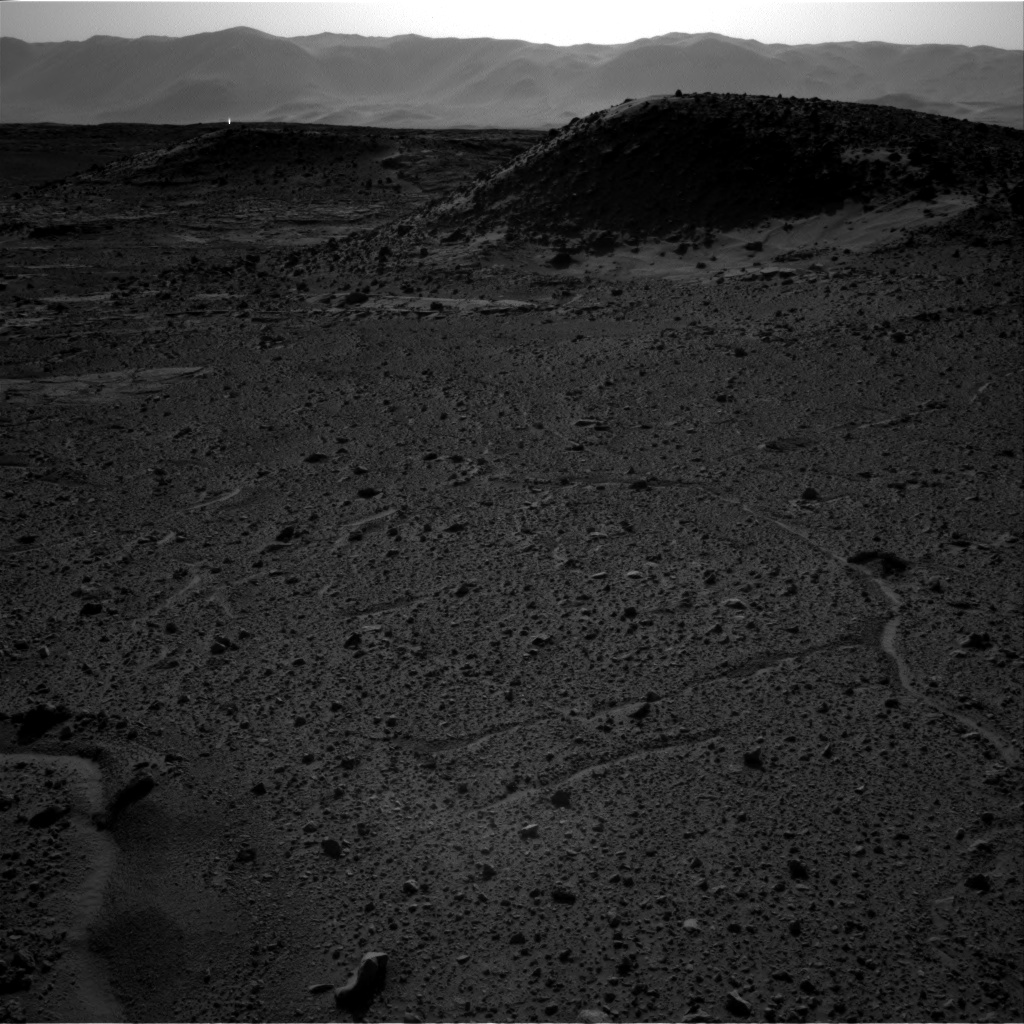
The first photograph was taken by Navcam: Right B (NAV_RIGHT_B) onboard NASA's Mars rover Curiosity on Sol 588 (2014-04-02 09:04:28 UTC):


Below is a closeup of the unusual part of the image (which appears on the top left corner). 


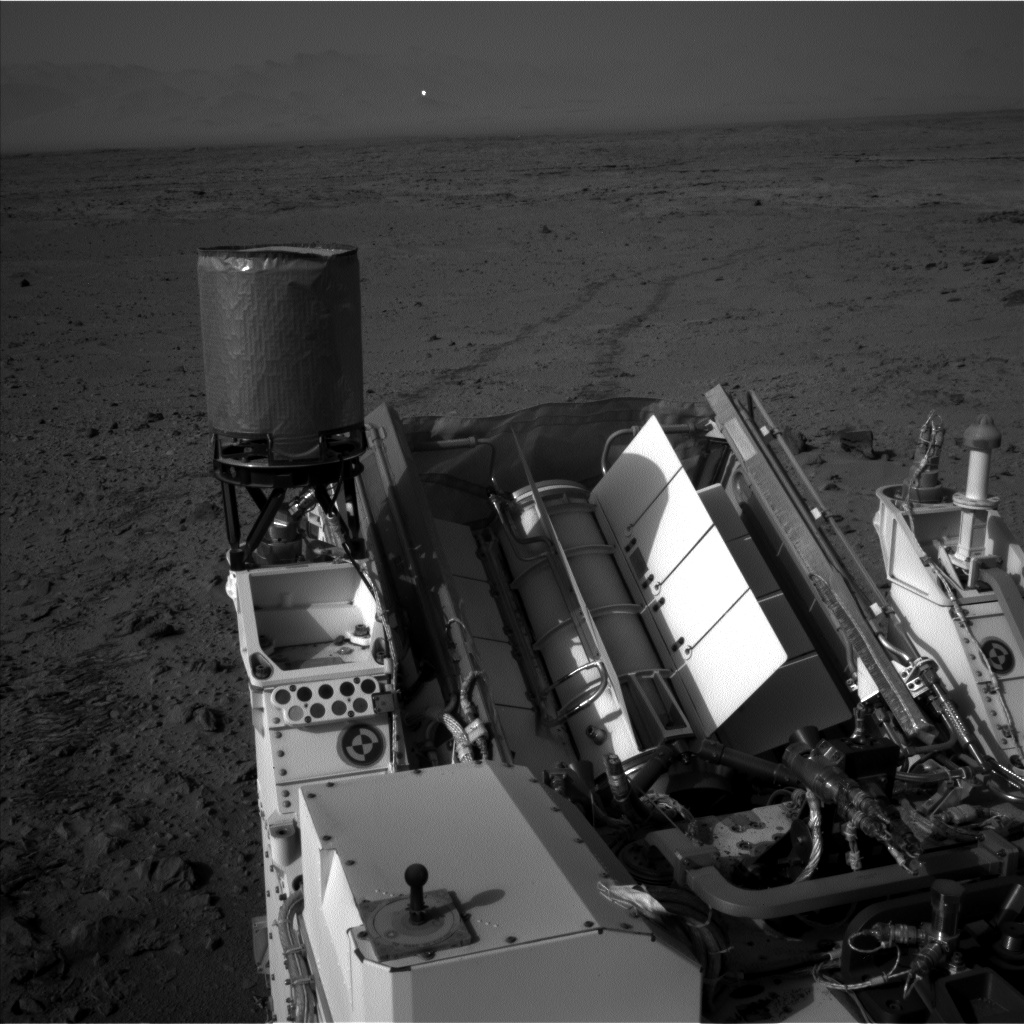
The second photograph was taken the next day by Navcam: Right B (NAV_RIGHT_B) onboard NASA's Mars rover Curiosity on Sol 589 (2014-04-03 10:00:03 UTC).


Below is a closeup of the unusual part of the image, which appears on the top left corner.


Both photographs show what appear to be flashes of light on the surface of the horizon, with an orientation perpendicular to the horizon. It is as if the lights were shining straight up from the surface in the direction of the sky, without any diagonal slanting.

Three explanations have been put forth for the images by Justin Maki, a NASA imaging scientist. The first explanation is that the lights are reflections from a rock on the horizon. The second explanation is that the apparent lights are caused by a vent hole in the camera apparatus. The third explanation is that the apparent lights are caused by cosmic rays.

First, let's look at the cosmic ray explanation. This was immediately seized upon with great matter-of-fact dogmatic certitude by Nancy Atkinson at the Universe Today site (www.universetoday.com). But it is easy to show that cosmic rays don't work well as an explanation for both of the photographs.

A cosmic ray is a particle from deep space that sometimes appears as a little streak on a photograph. But a cosmic ray can come with equal likelihood from any direction, as suggested by the visual below.

Cosmic rays can arrive from any direction


Also, a cosmic ray might appear as a streak anywhere on a photograph. It is therefore very unlikely that a cosmic ray would cause what looks like a streak of light that appears on the horizon directly perpendicular to the horizon.

One can calculate the chance of this with a little math. Let's divide up the area shown in the photograph into about 50 vertical slices, one of which corresponds to the horizon line. The chance of a random cosmic ray matching the horizon line is therefore roughly about 1 in 50. The chance of the ray having an orientation directly perpendicular to the horizon is about 1 in 20. So the chance of you having a random cosmic ray appearing as something on the horizon and perpendicular to the horizon is about 1 in 50 times 1 in 20, or about 1 in 1000. The chance of such a coincidence occurring on two consecutive days is less than 1 in 1000 times 1 in 1000 (in other words, less than 1 in a million). Not impossible, but very, very unlikely.

Now let's look at the vent hole explanation. This explanation suffers from exactly the same problem as the cosmic ray explanation. If a little vent hole were causing a tiny bit of sunlight to leak into the camera, it is extremely unlikely that we would coincidentally have two consecutive days in which there appeared what looks like a flash of light on the horizon and perpendicular to the horizon.

The vent hole explanation is even more implausible than the cosmic ray explanation, because once you have adopted the vent hole explanation you are then wedded to the theory that there is a camera defect. Such a camera defect would have to keep on showing up again and again in photographs, but there is apparently no evidence of such a defect in photographs after April 3, 2014.

What about the third theory, the theory of a rock that is reflecting light? There are two reasons why such a theory does not hold water. The first is that Mars is much farther away from the sun than Earth. Ask yourself: have you ever seen a rock far away on the horizon reflecting light? You probably never saw that, and your chance of seeing it on Mars is much smaller, as the sun appears as a much smaller object in the Martian sky. Rocks are dull, non-reflective objects that do not reflect light to a significant degree. Glass and metal reflect light well; rocks do not. The only type of rocks that reflect light reasonably well are wet, round rocks like the rocks at the seashore; and such rocks presumably do not exist on Mars.

Try a Google image search for “rock glint” or "rock reflection" and you will find not one single good example of one. When we don't see rocks strongly reflecting sunlight on Earth, how could they be strongly reflecting light on Mars?

Another reason why the rock reflection theory is not plausible is that glints of light caused by reflections typically appear as star-shaped glints, not a straight upward line as shown in the photographs.

In short, none of the three theories that NASA has advanced holds up very well to scrutiny. We do not currently have a good explanation for the images that appear to show lights at the horizon.

I am not suggesting that this necessarily means that the lights are caused by some alien activity. There are numerous unusual possibilities, and not all of them involve aliens. The apparent lights could have been caused by geysers or the geological phenomenon known as a dust devil (a swirling column of dust). There could be some unusual phosphorescence going on, or some unusual outgassing of chemicals. I have no idea what exactly caused these image features that look like lights, but it is clear that the explanations given thus far by NASA are not persuasive. 

Postscript:

We have additional possible photos of lights on Mars in this photo (in the upper left corner)  and this photo.